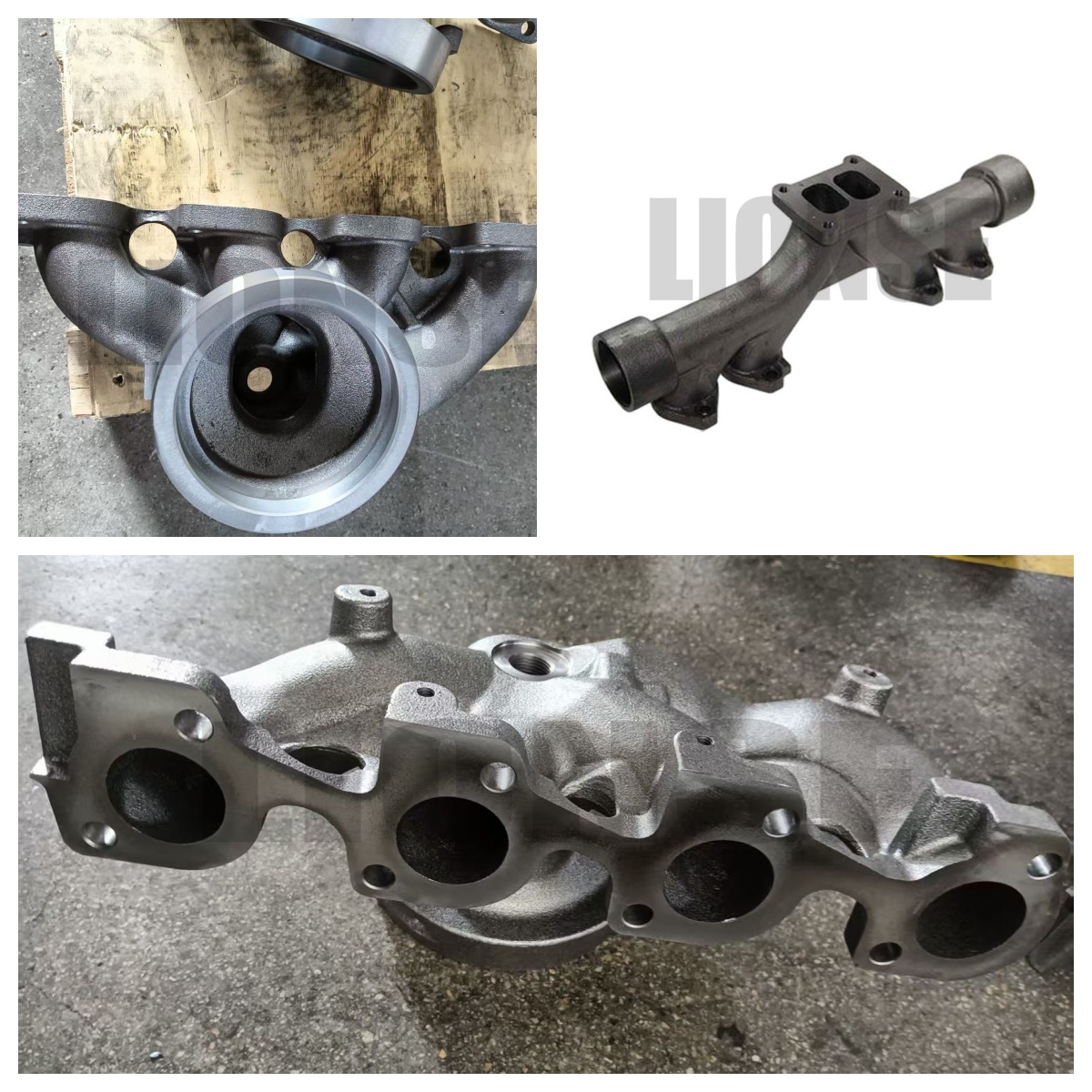

Ductile iron has strong oxidation resistance at high temperatures. The holes formed after oxidation have little impact on high-temperature strength, making it suitable for long-term high-temperature operating conditions and meeting the usage requirements of engines in complex environments.
The casting process can achieve one-piece molding of complex shapes, reducing welding procedures, lowering the risk of air leakage, and also adapting to the compact layout of the engine compartment, thereby improving space utilization.
These manifolds are great at moving heat—they quickly get rid of the heat from engine combustion, keeping the engine at a steady temp. No overheating means no drop in performance, so the engine runs smoothly and efficiently.
The design cuts down on turbulence and vibration when exhaust flows through, which quiets things down. Tight seals stop exhaust leaks (and the noise they make) and work with mufflers to make the ride even quieter.
Casting can make complex shapes in one piece, so no need for lots of welding (which means fewer leaks). It also fits tight engine bays, so we use space smarter.
In terms of cost, cast exhaust manifolds have obvious advantages. The cost of cast iron material is relatively low, and the casting process is suitable for large-scale production, which can achieve standardization and scale, effectively controlling the manufacturing cost of the entire vehicle.