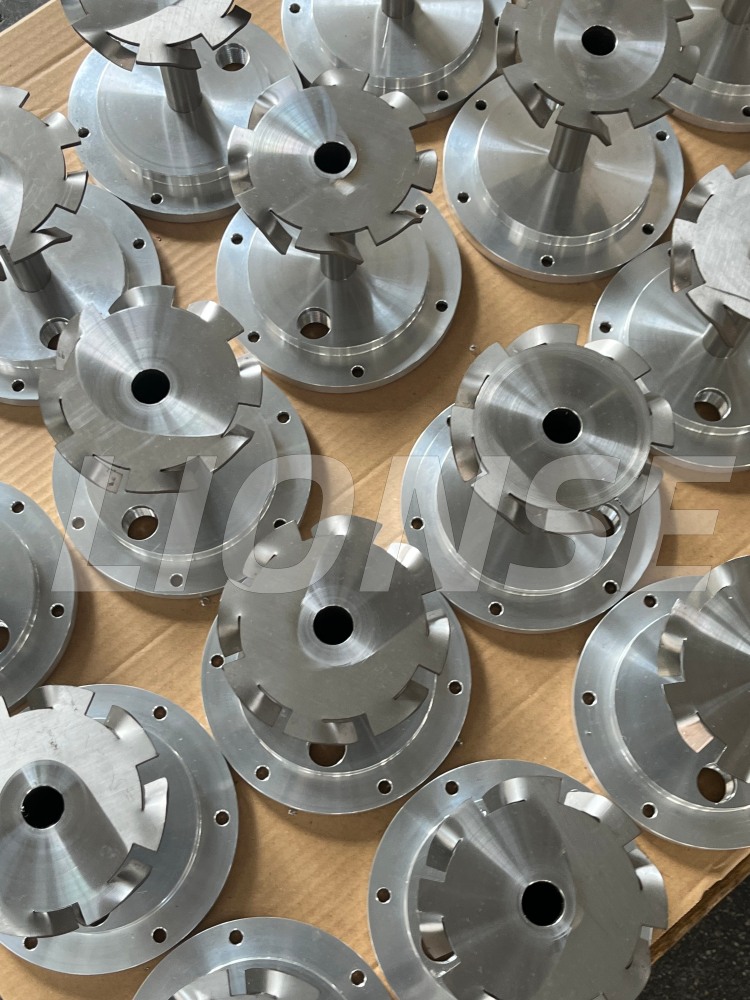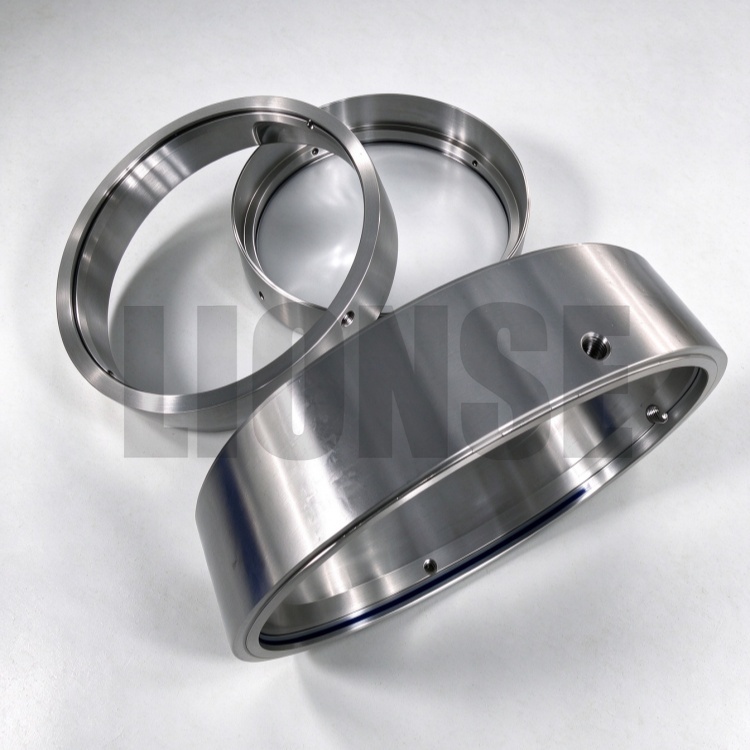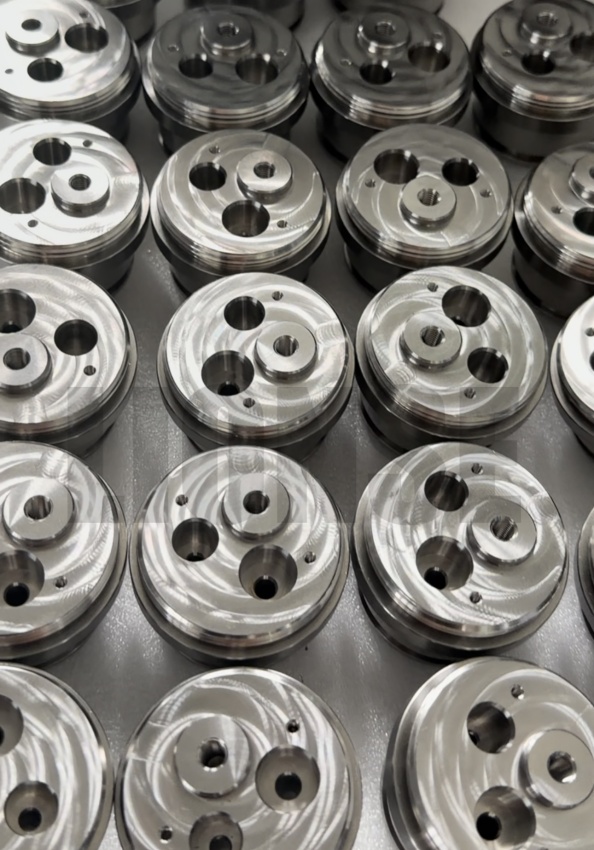

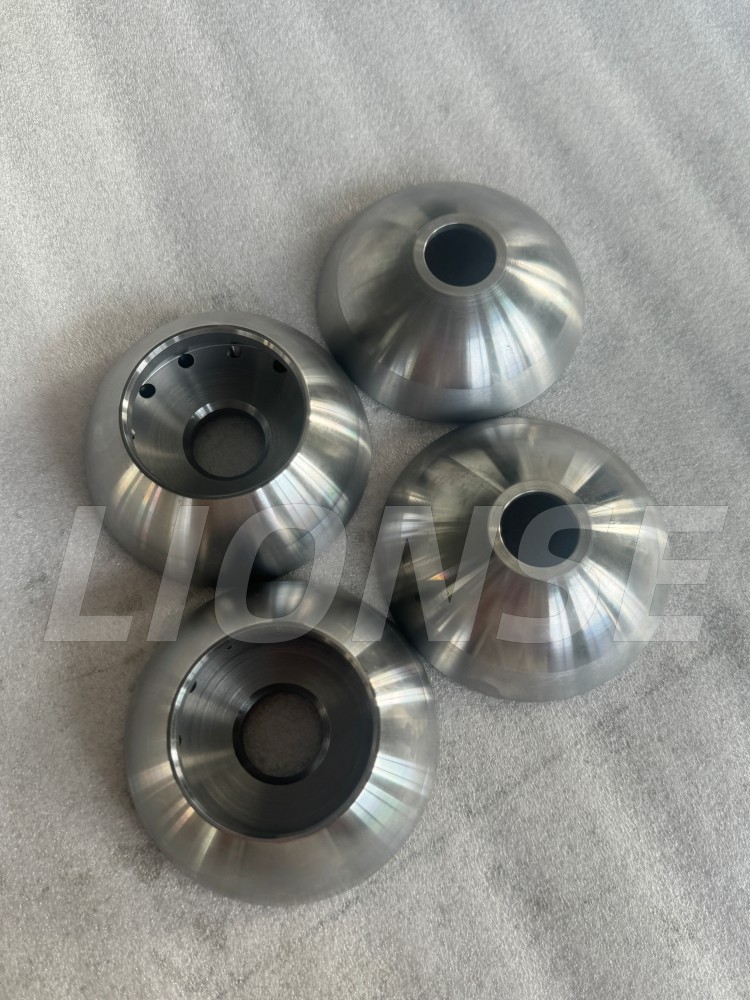
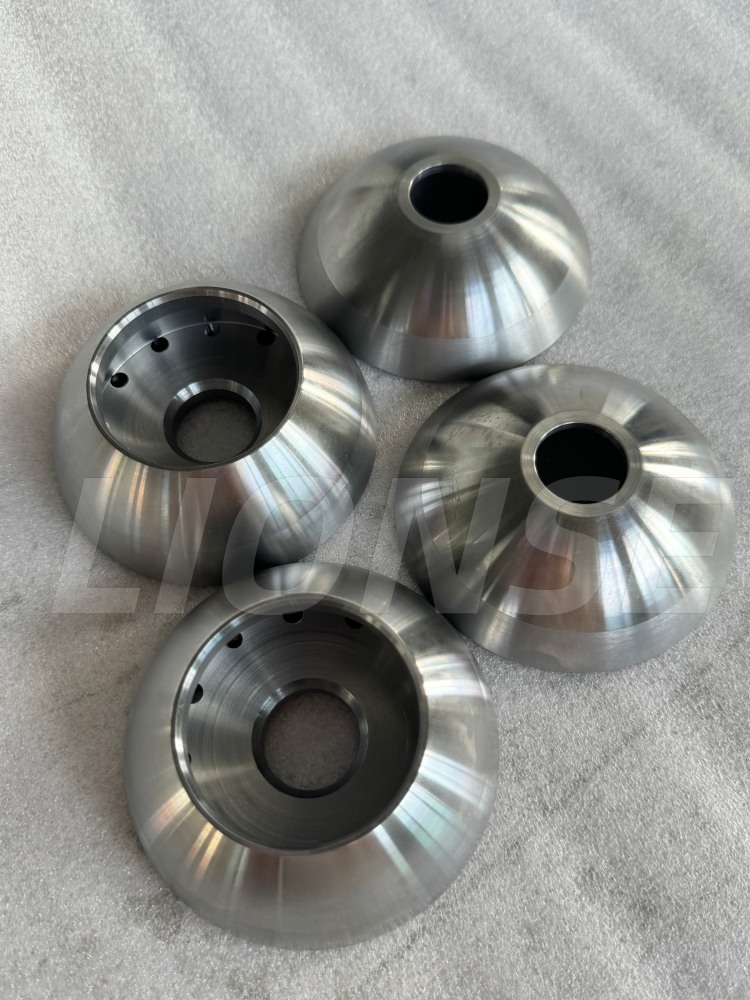
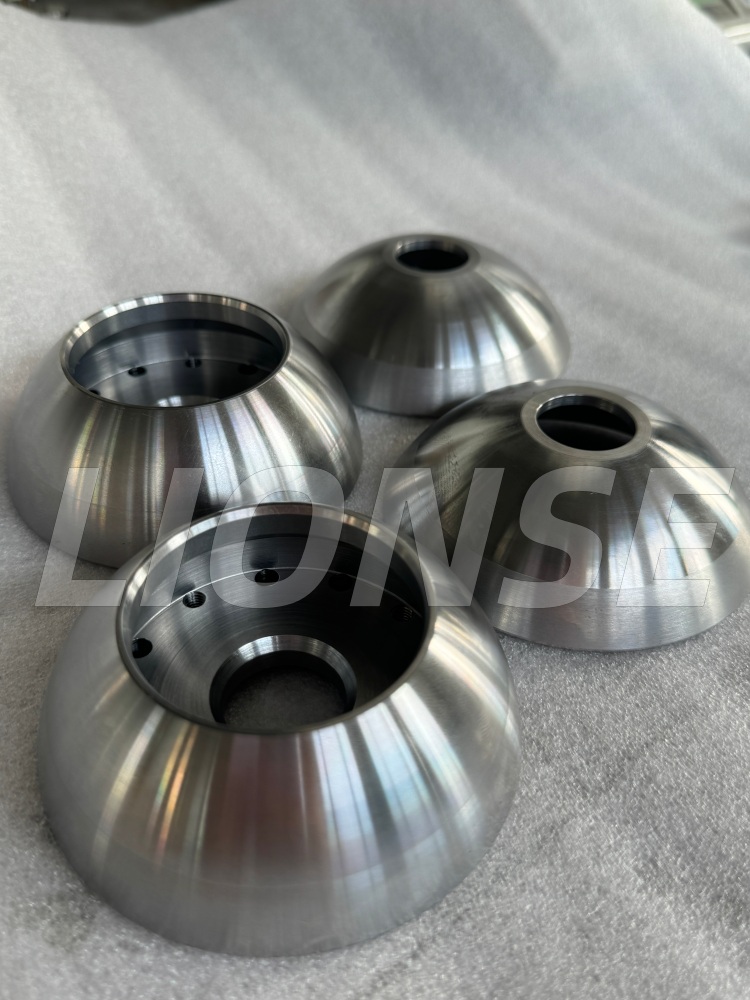
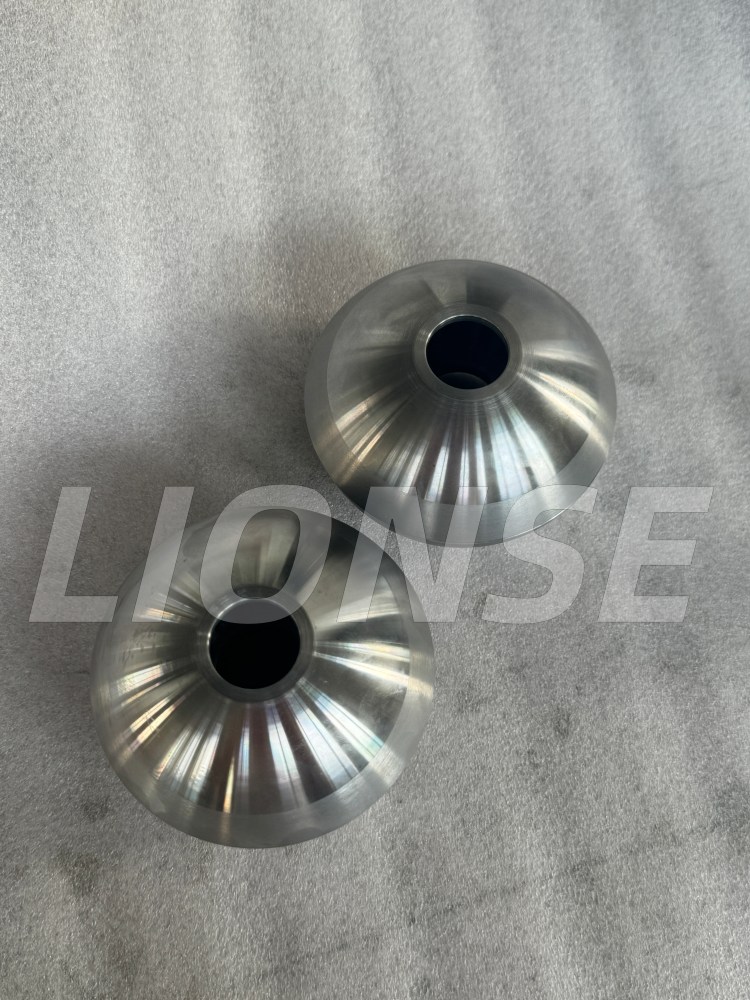
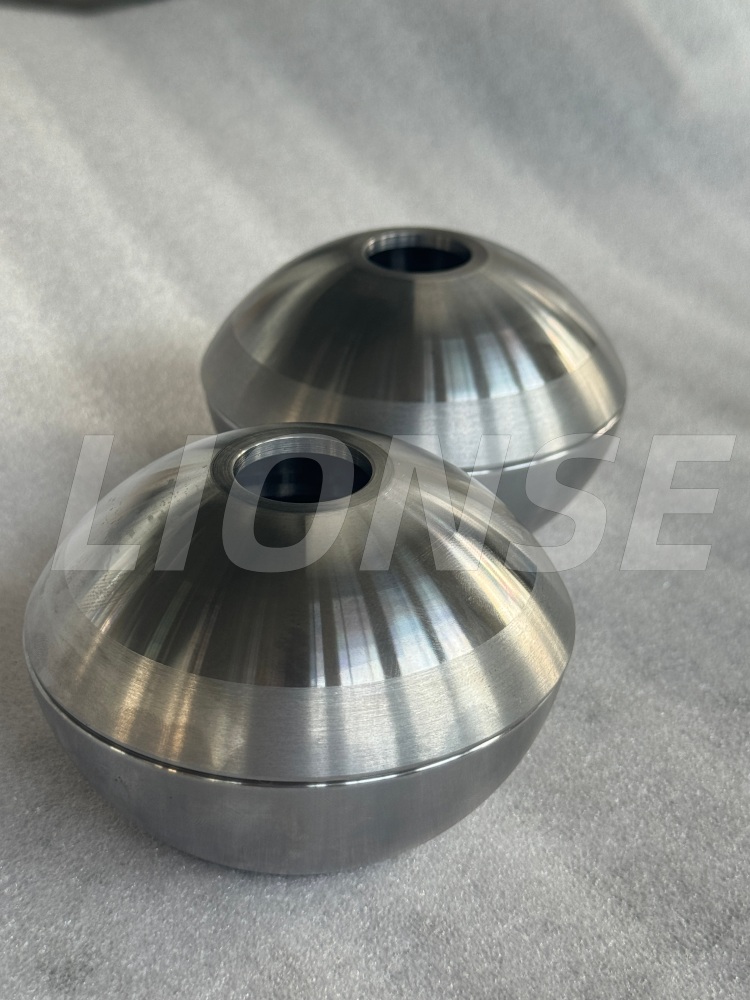
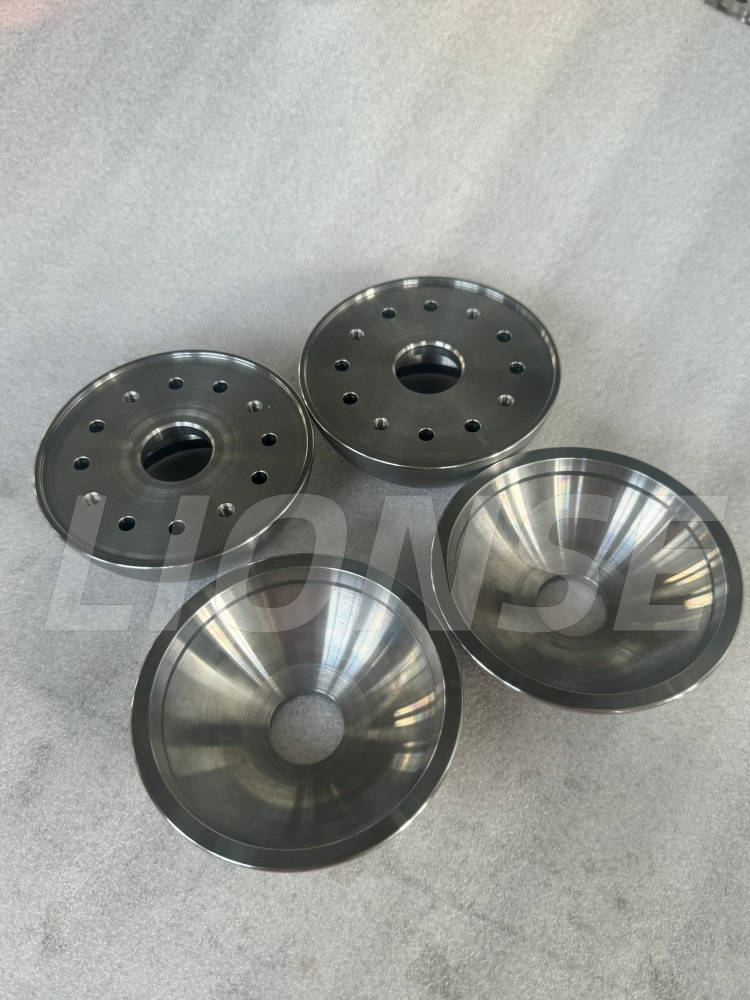
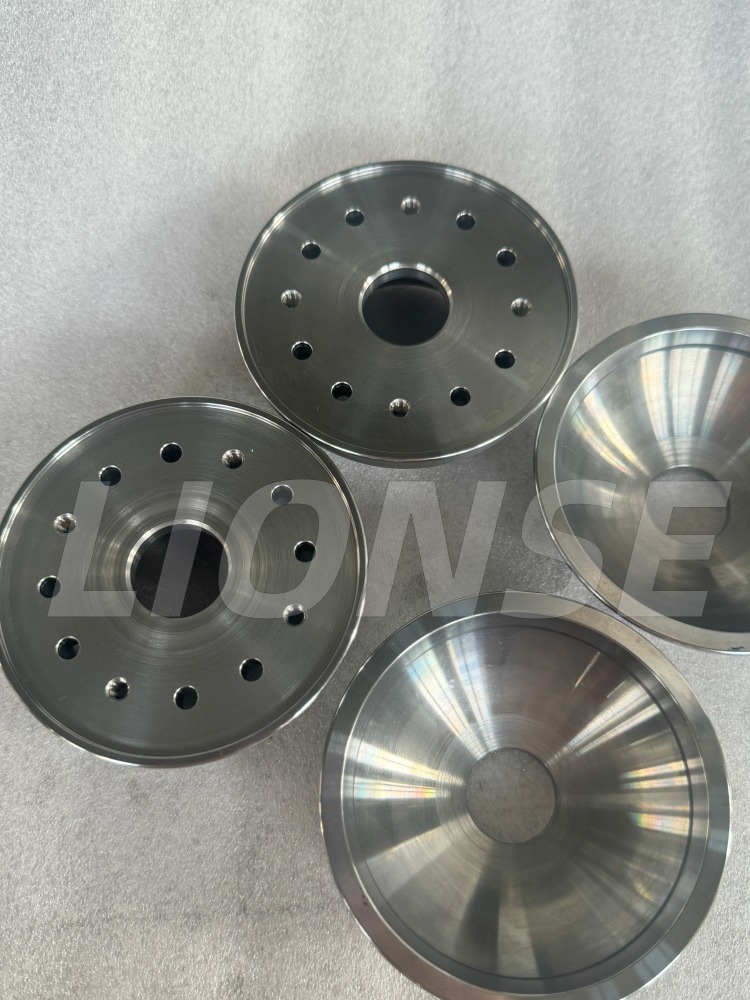
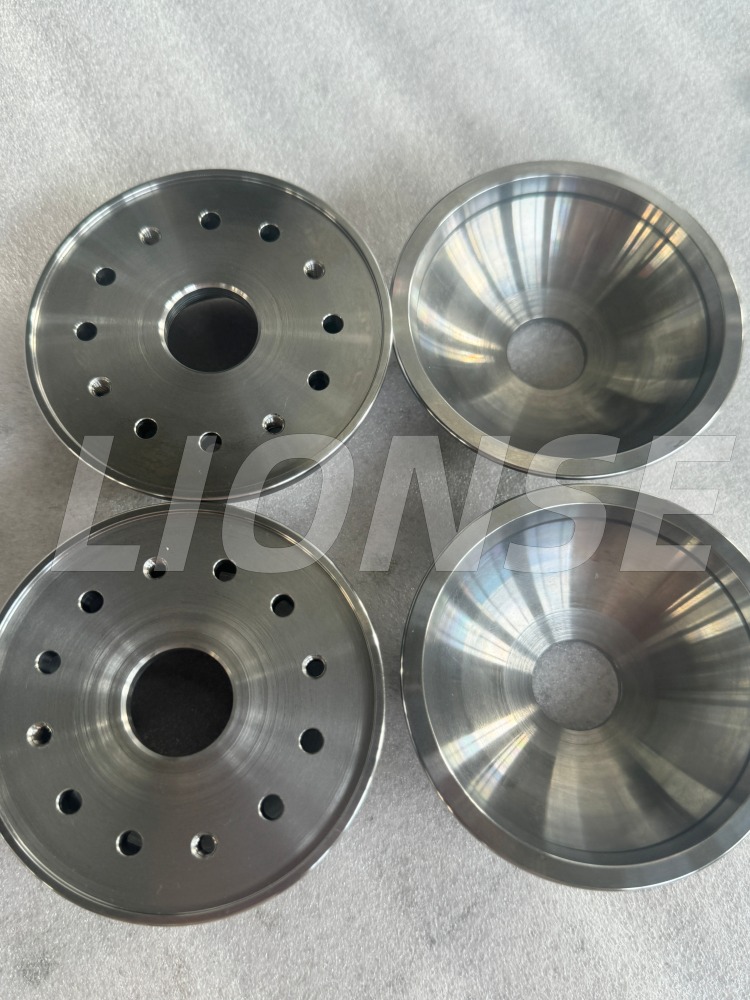
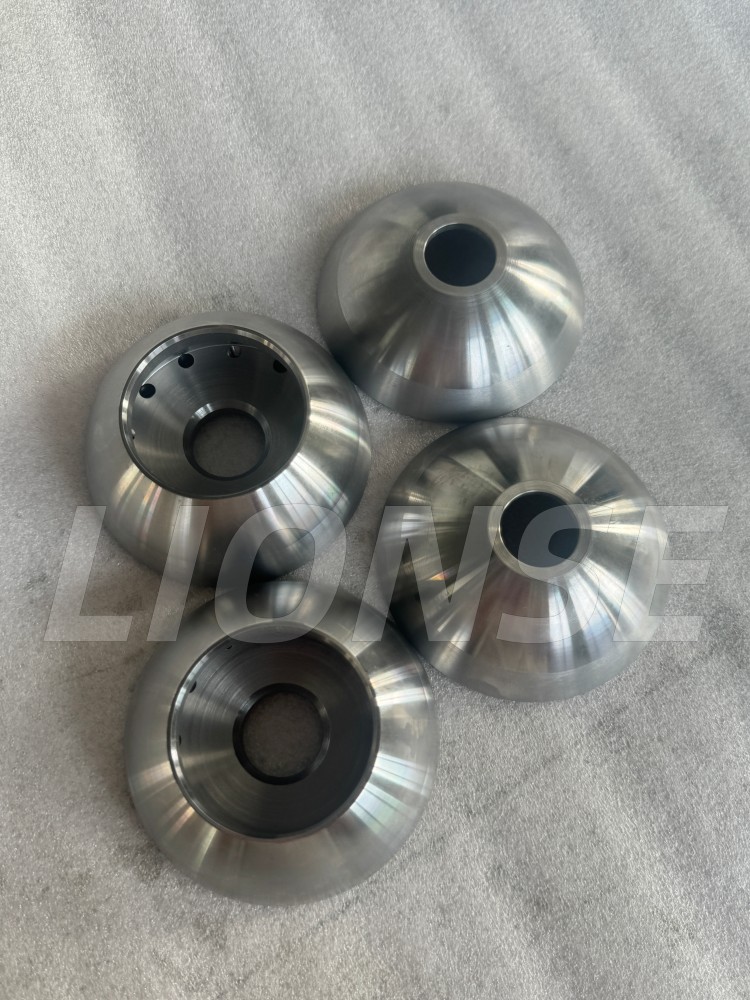
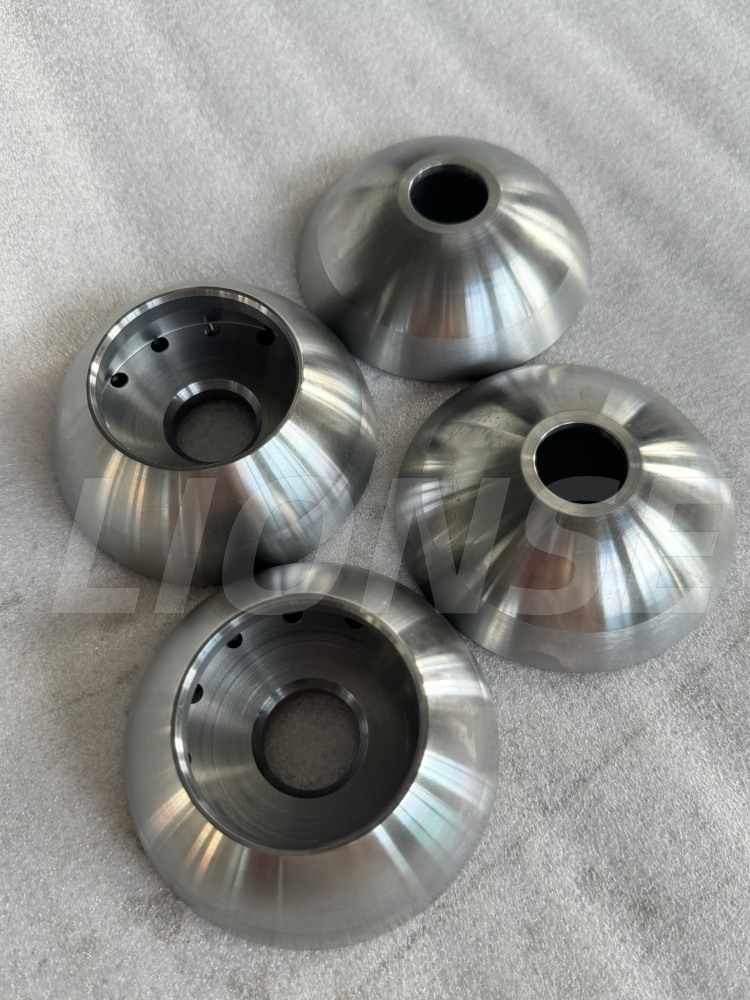
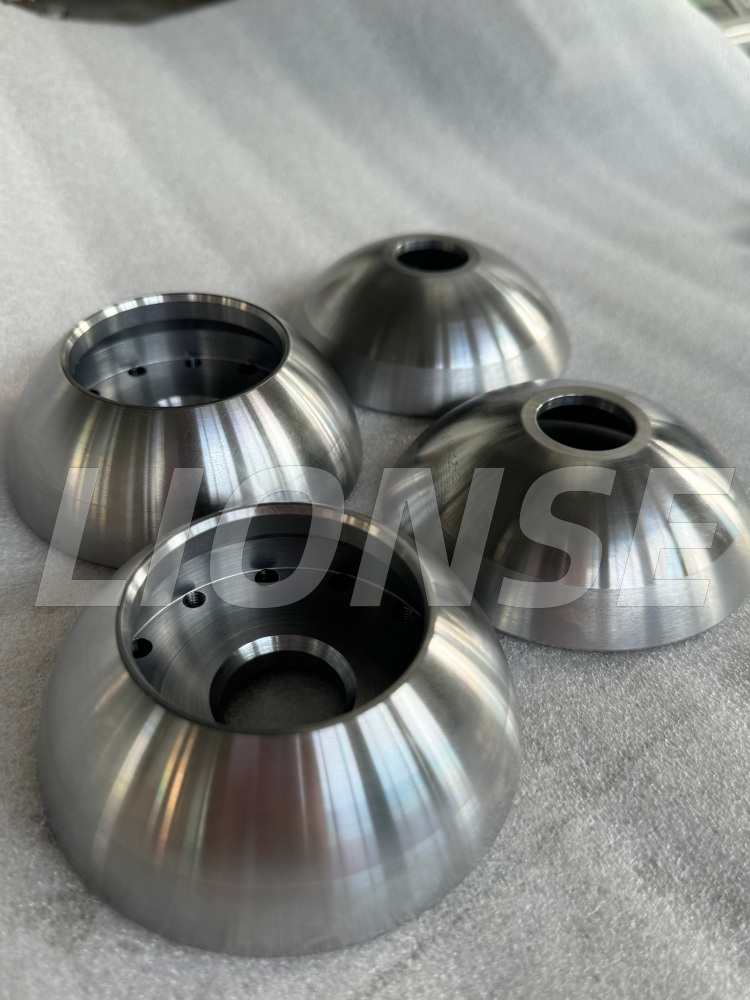
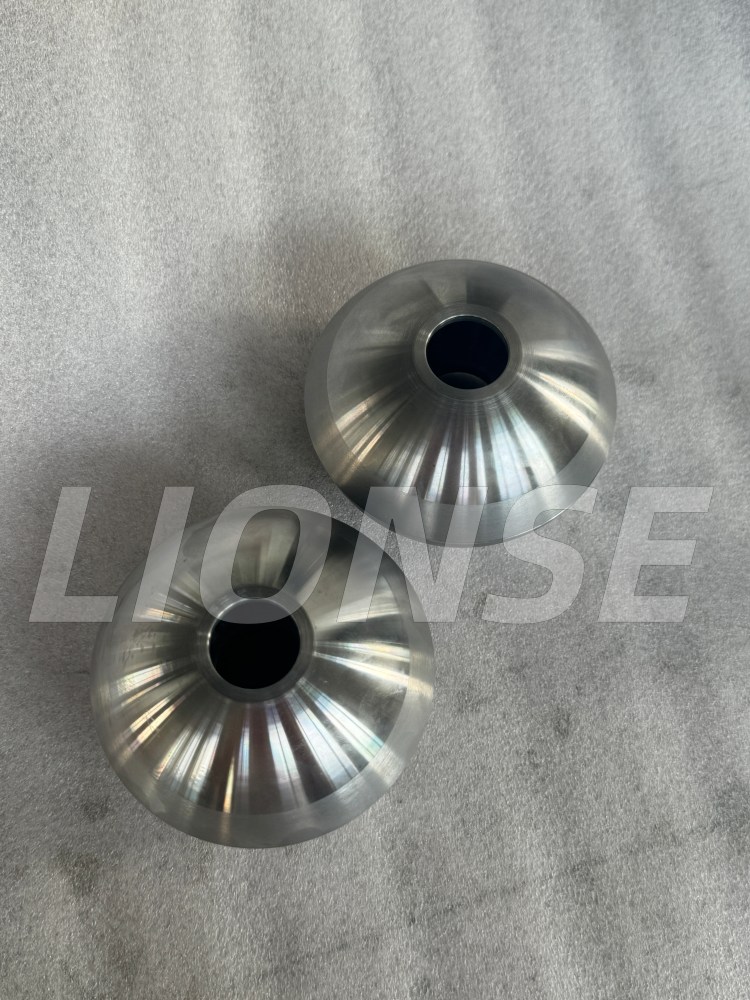
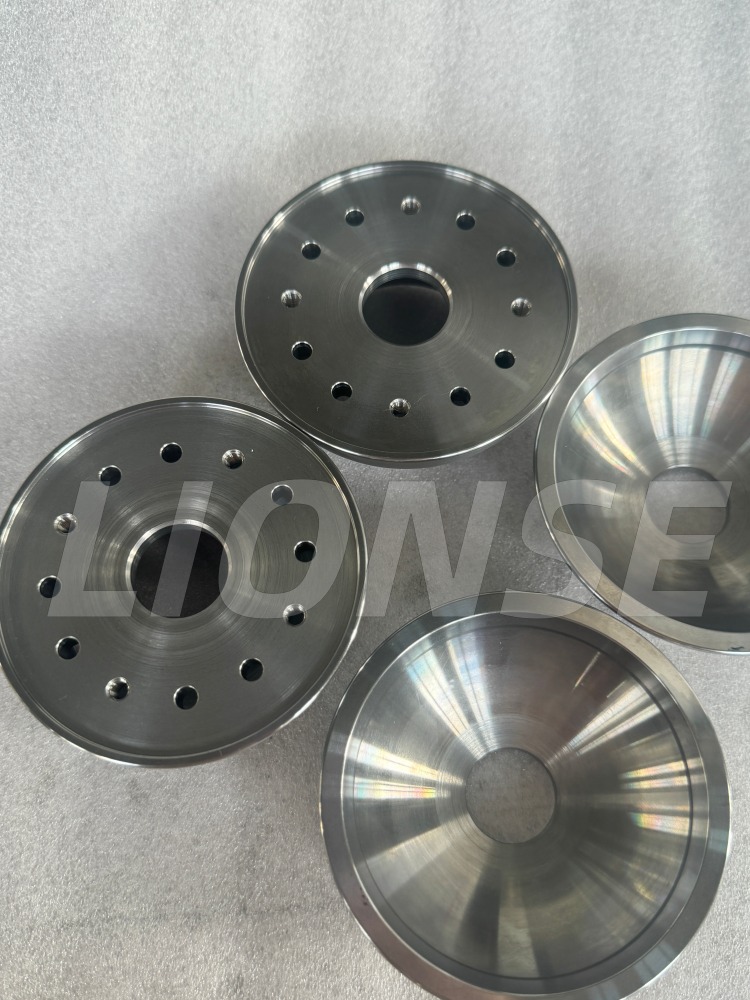
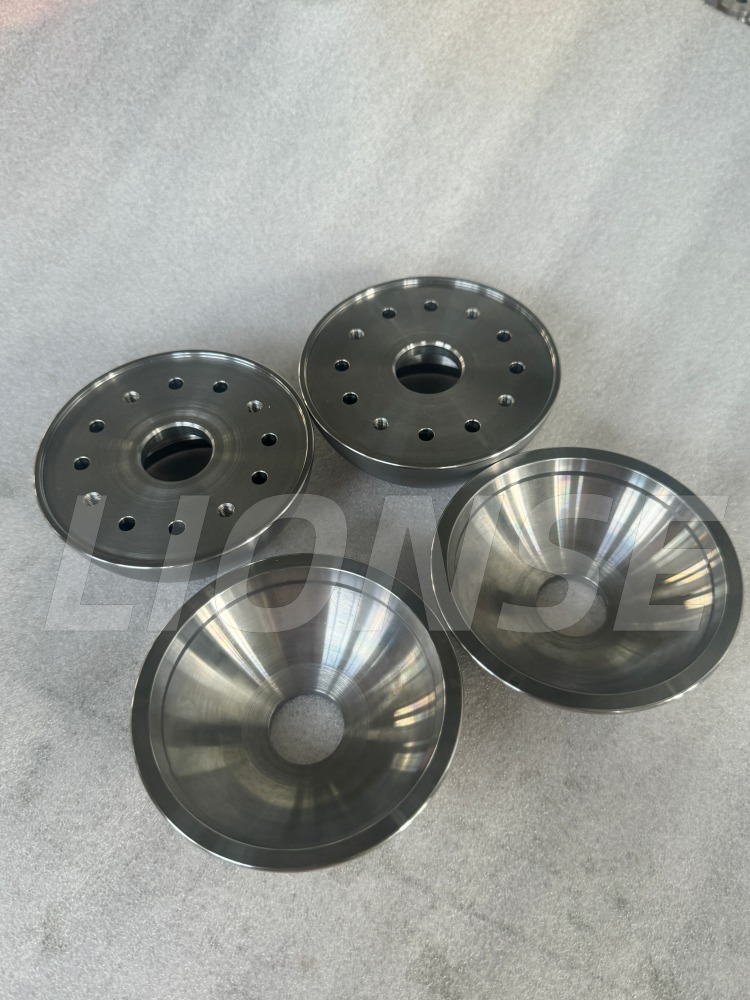
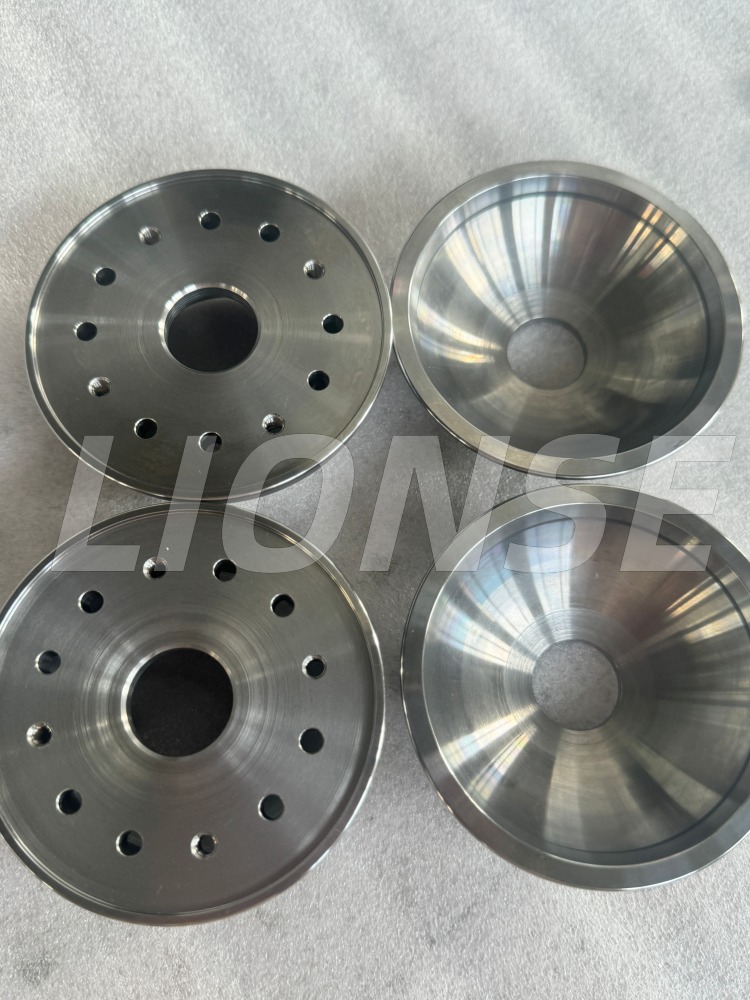
This split ball serves as the core component for orbit ball valves. Precision CNC‑machined from forged 20CrNiMo (AISI 8620) steel bar instead of casting. CNC Machined Orbit Ball Valve serves as the core component for orbit ball valves. Composed of upper and lower half‑balls, it features high dimensional accuracy with spherical surface, inner bore and pressure‑relief holes completed by CNC turning‑milling. Carburizing‑quenching heat treatment is optional to achieve wear‑resistant surface and tough core for high‑pressure impact‑loaded conditions.
As a professional manufacturer in CNC Machining, Lionse can provide both drilled (with pressure‑relief holes) and non‑drilled versions. Widely used in orbit ball valves for petroleum, chemical and energy industries.
Precision CNC Machined Orbit Ball Valve consists of two half‑ball parts: upper ball and lower ball. Spherical surface, inner bore, locating steps and pressure‑relief holes are all finished by CNC turning‑milling, with tight dimensional and spherical geometric tolerance.As a case‑hardening steel component, it is available for subsequent carburizing & quenching heat treatment. After heat treatment, surface hardness reaches HRC58‑62 for excellent wear‑resistance and anti‑erosion performance, meanwhile the core keeps good toughness to withstand high‑pressure and impact working conditions.
|
Production Name |
CNC Machined Orbit Ball Valve |
| Material Capabilities |
20CrNiMo (AISI 8620) |
|
Brand |
LIONSE |
|
Surface Treatment |
As customer’s requirements |
|
Origin |
Qingdao, China |
Compared with stainless steel based alternatives (316L, 2205 duplex steel with Stellite hard‑facing), 20CrNiMo (AISI8620) delivers outstanding comprehensive cost performance for precision CNC machined orbit ball valve split‑ball components for petroleum, chemical and energy services.
Forged 20CrNiMo bar is significantly less expensive than 316L stainless steel and 2205 duplex steel. Wear‑resistant surface performance is achieved by carburizing‑quenching heat treatment rather than relying on high‑alloy expensive base stock, which lowers raw‑material expenditure for split‑ball blanks.
Metal‑to‑metal hard‑sealed orbit balls made of stainless steel require Stellite cobalt‑alloy overlay to reach HRC 58‑62 wear resistance. Stellite material is costly, hard‑facing creates high reject rates and demands time‑consuming post‑weld re‑machining.
For 20CrNiMo, target surface hardness HRC 58‑62 is accomplished via proven carburizing‑quenching only. No hard‑facing welding is needed, cutting major manufacturing costs and reducing production risks.
In pre‑heat‑treatment forged‑annealed condition, 20CrNiMo has moderate hardness. Complex geometries including spherical sealing surface, inner bore, locating shoulders and pressure‑relief holes can be efficiently precision‑CNC‑machined. Tool wear is lower compared with hard stainless grades, shortening machining cycle time and reducing CNC processing cost.
LIONSE has established a well-deserved reputation in the CNC machining industry for quality, reliability, cost-effectiveness and timely delivery. To meet your expectations for your projects, our team of mechanics and engineers will work closely together throughout all stages of product development, from prototype to production. We recognize that each project and its application are unique, so we offer each customer a distinctive yet practical solution, including precision machining services and custom surface treatments. Contact us today and let us start creating your parts.
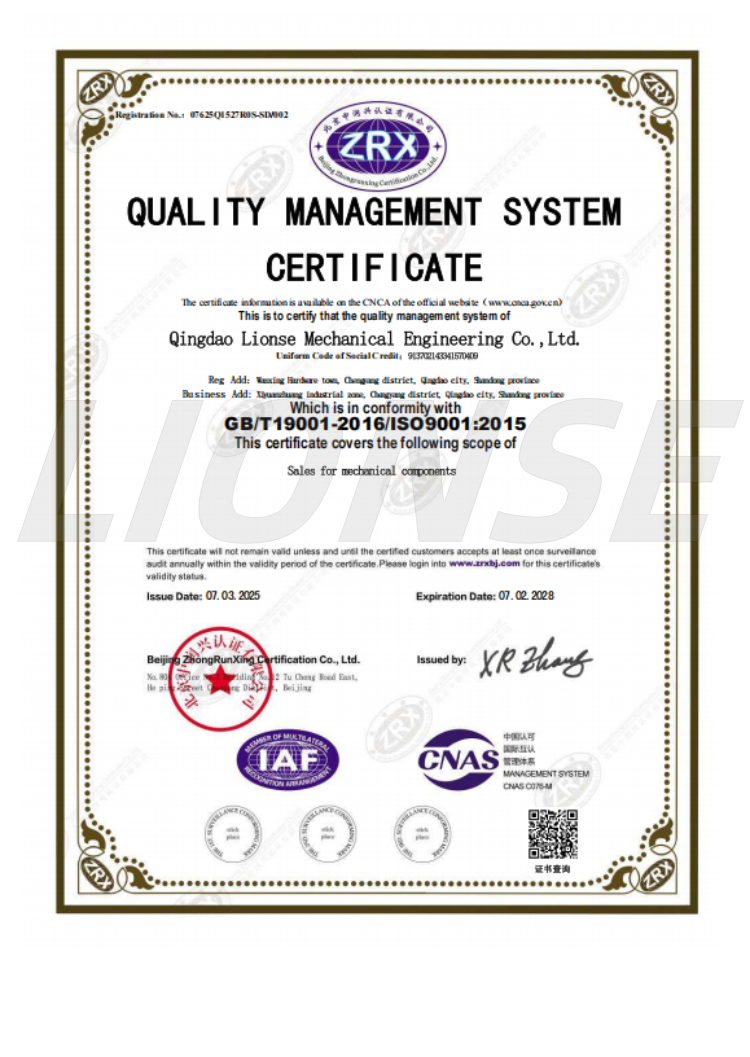

For over 15 years, LIONSE is a worldwide supplier in the distribution of titanium products, metal working and bearings. The industries we serve is including surgical implants & tools, automotive parts, chemical devices, power generation, mine equipments, aircraft, pumps etc. LIONSE is your reliable supplier.
All our orbit valve split balls are precision CNC‑machined from forged steel bar, not cast. Spherical surface, inner bore and pressure‑relief holes are finished by turning‑milling to guarantee tight tolerance.
20CrNiMo avoids expensive Stellite hard‑facing welding. Its raw‑material and total manufacturing cost are lower for non‑corrosive high‑pressure service. Stainless steel with hard‑facing is preferred for corrosive media but with higher overall cost.
Yes. Both drilled version with pressure‑relief holes and non‑drilled blank version are available, manufactured strictly per your drawing.