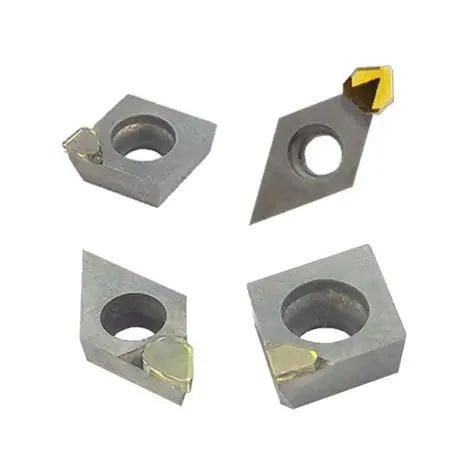

They’re like a natural “super tool” for ultra-micro machining. Single-crystal diamond is the hardest stuff in nature, so it’s super tough and doesn’t wear out easily. When cutting, it stays the same size, which is the bedrock for ultra-precise work. Its edge can be as tiny as a nanometer, so the area it touches while cutting is small. That means less cutting force and heat, so the material doesn’t warp or get damaged by heat—perfect for getting super smooth surfaces. Plus, it doesn’t rub much, so it uses less energy, chips don’t stick to it, and cutting goes smoothly. That’s how it keeps the work accurate and top-quality.
In real use, these tools are already doing well. For optical parts, they make lenses that are super smooth and perfectly shaped, pushing the optical industry forward. In semiconductors, when cutting silicon wafers, they do it with high precision and little damage, helping chips get smaller and work better.
But there are challenges too. They’re expensive to make—getting the raw materials and processing them is complicated, so they can’t be used on a big scale. They’re also brittle; if they get a hard hit or too much cutting force, the edge might chip, which messes up their life and the quality of the work. And when cutting special materials, their performance still needs to be better.