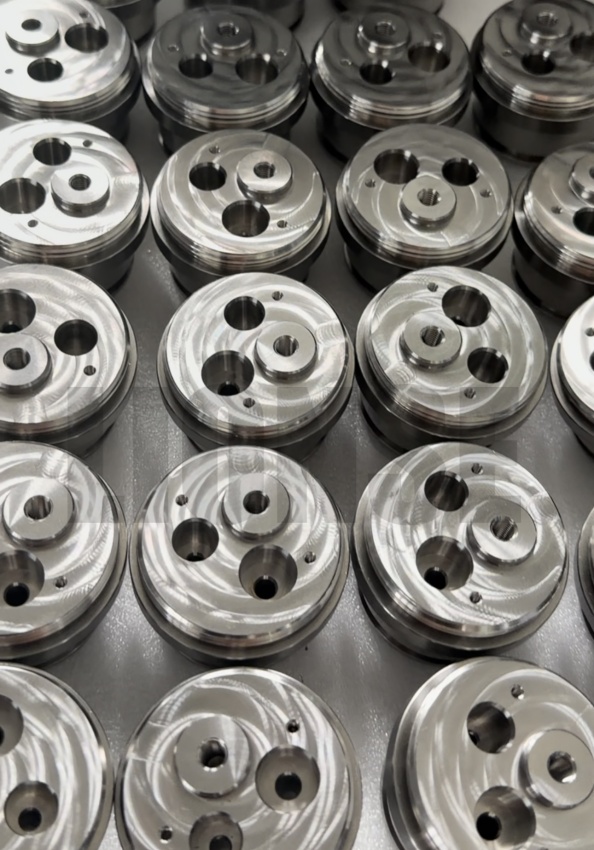

To cut down on those annoying cracks that pop up when machining deep-sea titanium alloy parts as much as possible, focus on these key points:
Go for materials that are tough, don’t wear out easily, and can handle high temps—like certain carbides. They need to stand up to strong cutting forces and heat. Mess around with the tool’s angles (like the rake angle) to get the right balance between cutting speed, tool sturdiness, and how well it cools down. And keep those tools sharp by giving them regular check-ups.
Choose the right cutting speed based on the material, tool, and part you’re working on—too fast can cause too much heat stress, too slow might lead to impact damage. Control how fast the tool feeds into the material to keep the cutting steady; you don’t want the force to be too much or too little, or for it to jolt. Set the cutting depth based on how much material you need to remove and how strong the tool is—take off small bits at a time instead of one big cut to avoid stress piling up.
Start rough, then get fine. In rough machining, take off most of the extra material with big cuts, then in finishing, dial in the precision to reduce surface cracks. For tricky parts, plan the steps smartly—like drill the big holes first before the small ones—so stress doesn’t build up.
Use special clamps or extra supports (like inner supports for thin parts) to spread the force evenly, so there’s no shaking or warping. Try to clamp the part as little as possible—aim to machine multiple sides in one go. If you have to clamp it again later, make sure it’s positioned exactly right to cut down on mistakes and stress.
Keep the workshop temperature steady—cool it down if it’s too hot, warm it up if it’s too cold to ease thermal stress. Keep the machines clean by wiping them down regularly, and make sure the area stays tidy so parts and the cutting zone don’t get dirty.